Three novel disease genes identified as drivers of a new form of hereditary retinal blindness
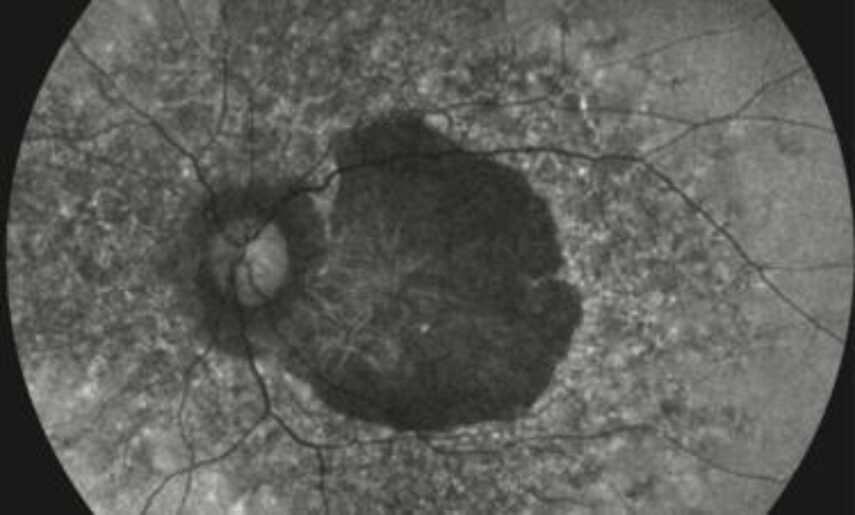
IOB researchers, working with a broad international team, have identified mutations in three genes encoding subunits of the vesicular AP-5 complex as a new cause of hereditary macular dystrophy, a form of inherited retinal disease (IRD) that leads to progressive vision loss.
In this study published in the American Journal of Human Genetics (AJHG), they examined 22 affected individuals from 19 unrelated families, all of whom exhibited a consistent pattern of macular degeneration, the deterioration of the central part of the retina responsible for sharp, detailed vision.
Through comprehensive genetic analysis, the research team discovered that recessive variants in three genes—AP5Z1, AP5M1, and AP5B1—independently cause this specific form of hereditary blindness. These genes encode different subunits of the Fifth Adaptor Protein (AP-5) complex, which plays a crucial role in intracellular trafficking and maintaining proper lysosomal function.
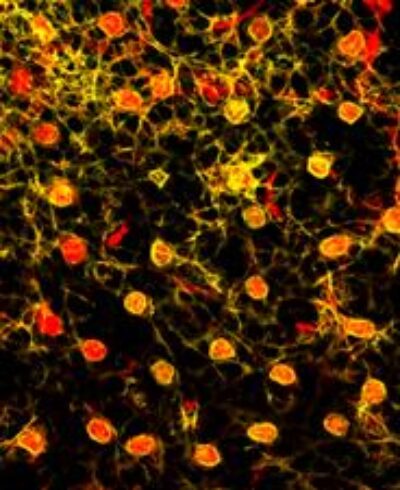
The retinal pigment epithelium (RPE), a cellular layer that supports and nourishes photoreceptor cells, might be particularly affected by AP-5 complex dysfunction. The research team demonstrated that AP-5 proteins are present in the human RPE, and they co-localize with markers of late endosomes and the Golgi apparatus, suggesting their importance in normal cellular processes within this crucial tissue.
Based on these findings, the researchers propose classifying this condition as “lysosomal macular dystrophy”, highlighting its connection to lysosomal storage diseases and providing a framework for future research and clinical management.
This work represents a significant step forward in addressing the “missing heritability” in IRDs, where approximately 20-50% of affected individuals still lack a definitive genetic diagnosis despite advances in genetic testing. By identifying the involvement of the AP-5 complex in macular health, this discovery not only expands our understanding of the genetic architecture of IRDs but also offers new diagnostic opportunities for individuals who have undergone prior genetic testing without receiving a conclusive result.
Original Publication
Biallelic variants in three genes encoding distinct subunits of the vesicular AP-5 complex cause hereditary macular dystrophy
Karolina Kaminska, Francesca Cancellieri, Mathieu Quinodoz, Abigail R. Moye, Miriam Bauwens, Siying Lin, Lucas Janeschitz-Kriegl, Tamar Hayman, Pilar Barberán-Martínez, Regina Schlaeger, Filip Van den Broeck, Almudena Ávila Fernández, Lidia Fernández-Caballero, Irene Perea-Romero, Gema García-García, David Salom, Pascale Mazzola, Theresia Zuleger, Karin Poths, Tobias B. Haack, Julie Jacob, Sascha Vermeer, Frédérique Terbeek, Nicolas Feltgen, Alexandre P. Moulin, Louisa Koutroumanou, George Papadakis, Andrew C. Browning, Savita Madhusudhan, Lotta Gränse, Eyal Banin, Ana Berta Sousa, Luisa Coutinho Santos, Laura Kuehlewein, Pietro De Angeli, Bart P. Leroy, Omar A. Mahroo, Fay Sedgwick, James Eden, Maximilian Pfau, Sten Andréasson, Hendrik P.N. Scholl, Carmen Ayuso, José M. Millán, Dror Sharon, Miltiadis K. Tsilimbaris, Veronika Vaclavik, Hoai V. Tran, Tamar Ben-Yosef, Elfride De Baere, Andrew R. Webster, Gavin Arno, Panagiotis I. Sergouniotis, Susanne Kohl, Cristina Santos, Carlo Rivolta
Am J Hum Genet. 2025 Apr 3;112(4):808-828.