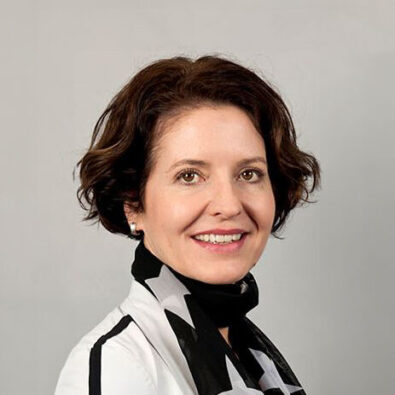
Caroline Klaver
She obtained her MD at Erasmus University in Rotterdam and subsequently also a PhD in clinical epidemiology. She then was a postdoctoral research fellow at the University of Iowa and Columbia University in the US.
Since 2003, she has been a senior researcher at the Netherlands Institute for Neuroscience in Amsterdam as well as ophthalmologist and clinical researcher at the Erasmus Medical Center in Rotterdam. At Erasmus University, she holds a professorship in Epidemiology and Genetics of Eye Disorders, and she is a clinically active ophthalmologist and retinal specialist at Radboud University Medical Center in Nijmegen, the Netherlands.
As an ophthalmologist, her expertise is in inherited eye disorders, medical retina, and myopia. She is a board member of the Dutch national Medical Retina Working Group, and has been actively involved in developing Preferred Practice Patterns for various retinal disorders. She has also been internationally involved in development of health outcome measures for age-related macular degeneration, with the organization ICHOM.
Caroline Klaver became interested in myopia control in 2011, and has been developing treatment regimens for myopia progression. In Rotterdam, the Eye-NED reading center grades ophthalmic images in a multimodal fashion and implements artificial intelligence to assist human grading. Her research group in the Netherlands currently consists of over 30 persons, including postdocs, PhD students, medical students, and research assistants.