Blindness
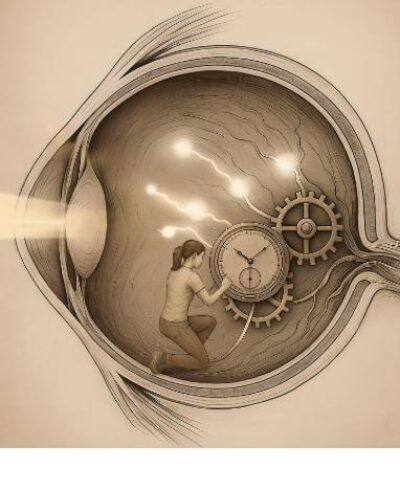
Many eye diseases cause blindness despite preservation of the retinal architecture. These conditions may be treated by activating retinal cells with optogenetics — a technique that programs cells to produce light-sensitive proteins of microbial origin. Researchers now at IOB have pioneered an optogenetic approach to restore sight in blind people.
Blindness affects millions of people worldwide. Some blinding diseases, including most inherited retinal diseases and geographic atrophy, leave much of the retina intact, but no longer light sensitive.
IOB’s optogenetic approaches for restoring vision sensitize blind retinas to light and have the potential to restore some degree of vision to blind patients. The first therapies using this technology are showing positive clinical results, including technologies developed by IOB researchers. IOB’s newest approach to this kind of therapy targets cone cells and has the potential to restore high-acuity vision to blind patients.
IOB researchers have pioneered a novel therapeutic approach to restore high-resolution vision in blind patients.
Publications
Engineering infrared light detection in blind human retina using ultrasensitive human TRPV1 channels
Trends Biotechnol.,
2025
High-efficiency base editing in the retina in primates and human tissues
Nature Medicine,
2025
Retinal Disorders
Cold Spring Harbor Laboratory Press,
2024
Get Involved
There are many opportunities to get involved. Help us restore vision.
News & Insights