Myopia
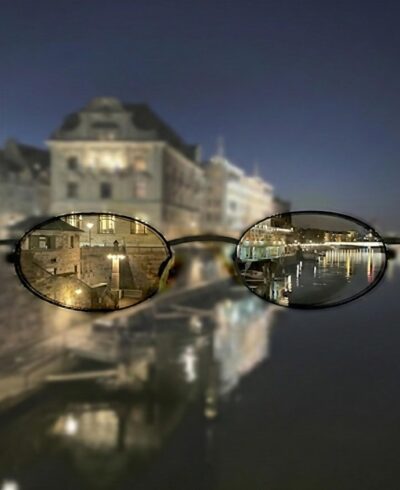
Some individuals develop severe myopia that continues to worsen beyond childhood. When corrective lenses of minus 6 diopters or more are needed, this is called high myopia. High myopia, or severe nearsightedness, occurs when the eyeball grows too long, causing light to focus in front of the retina rather than directly on it, which results in blurry distance vision.
Individuals with high myopia face a significantly increased risk of serious eye conditions including macular degeneration, glaucoma, and retinal detachment. Because myopia is so widespread and these complications can lead to blindness, experts predict that myopia will become the leading cause of blindness in the coming decades.
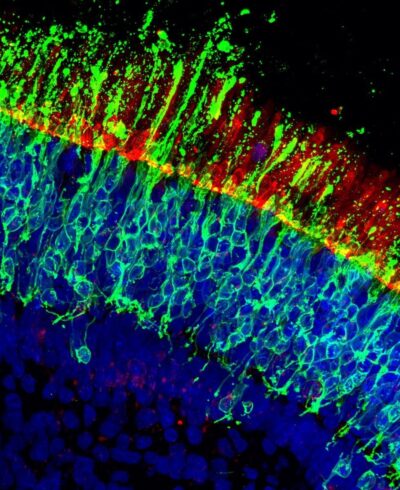
While glasses and contact lenses can correct vision in people with high myopia, they do not reduce the risk of these sight-threatening complications. IOB scientists are working to uncover the molecular mechanisms that drive myopia development and to use this knowledge to develop therapies that prevent its blinding complications.
IOB researchers have identified some of the visual cues that cause the development of myopia and are also dissecting the molecular signaling that is responsible for myopia progression, which may lead to the development of therapies to prevent vision loss in patients with high myopia.
Publications
Key lines of discovery in myopia research
Mechanisms of emmetropization and what might go wrong in myopia
Toward Retinal Organoids in High-Throughput
Get Involved
News & Insights